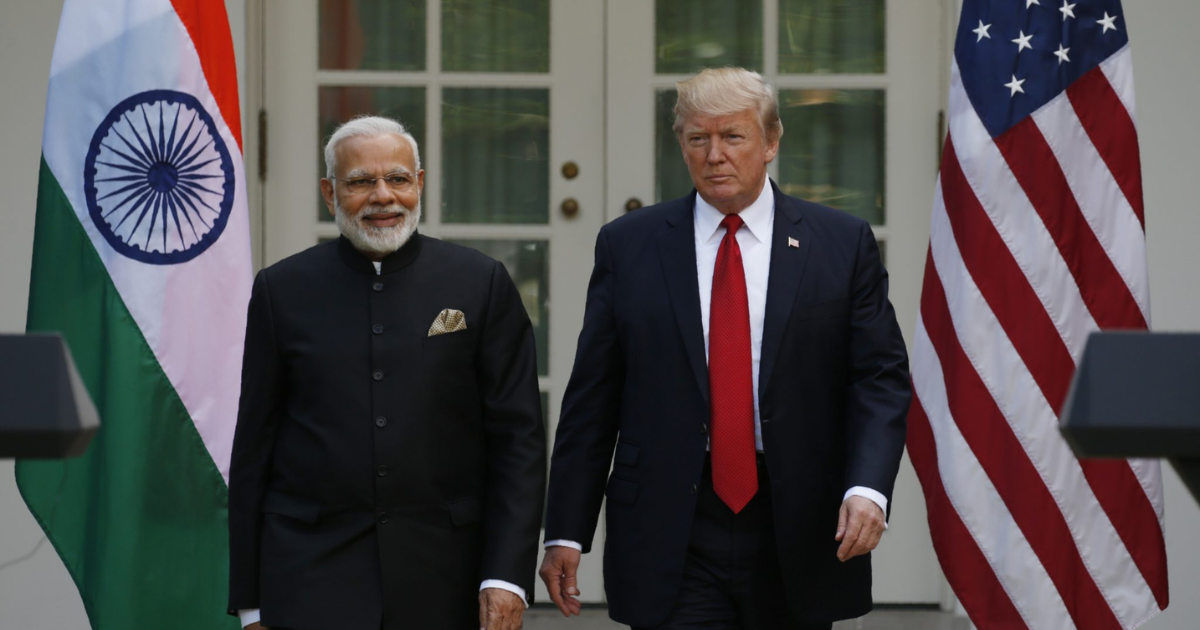
The United States and India are reportedly moving toward a new trade agreement that would sharply lower US tariffs on Indian goods, in a surprise thaw after months of bruising trade tensions that had begun to spill into markets and diplomacy.
US President Donald Trump said Washington will cut tariffs on Indian imports to 18%, framing the move as part of a broader package in which New Delhi would scale back purchases of Russian oil, a point that has become increasingly sensitive as the war in Ukraine continues to reshape energy and geopolitics.
On the Indian side, officials have confirmed that a deal is coming but have been careful about the details. India’s commerce minister Piyush Goyal said the agreement would be signed “shortly” and that a joint statement will follow once final terms are locked in, without publicly validating every claim made from Washington.
The clearest part of the announcement is the tariff shift. The US is reportedly lowering a country-specific tariff on Indian goods from 25% to 18% and removing a separate 25% duty that had been linked to pressure on India over Russian oil purchases.
Where the picture gets hazier is the “trade deal” packaging around it. Trump has publicly suggested India will stop buying Russian oil and pivot to buying more from the US, while also implying major reductions in Indian barriers to American products.
India has not mirrored those exact claims line-for-line in public statements, and the final structure is expected to be clarified in the joint statement.
India’s commitments under the agreement include ramping up purchases of US goods — including petroleum and other categories such as defence and aircraft — alongside steps to ease selected trade barriers and provide limited market access for some US agricultural products.
This agreement lands after a period in which India became one of the harder-hit targets in Trump’s global tariff push. The US administration had explicitly linked tougher duties to India’s purchase of discounted Russian crude, arguing it undermined Western pressure on Moscow.
Even now, the politics remain delicate. A separate Reuters report noted the Kremlin said it had not heard public statements from India confirming it would halt Russian oil purchases, underlining how contested and sensitive that part of the narrative still is.
Whatever the remaining uncertainty, investors in India appear to be treating the headline as a near-term pressure release. Reuters reported a sharp lift in sentiment, with India’s benchmark Nifty 50 rising and the rupee strengthening, as traders priced in improved competitiveness for exporters and a lower risk of escalating tariffs.
That mood was captured by Nilesh Shah of Kotak Mahindra Asset Management, who said that while “the devil is in the details,” the announcement removes “a hanging sword” over the rupee, equities and rates.
Gold also rallied over 5% on Tuesday to trade above $4,900, as sentiment improved after Washington and New Delhi reached the breakthrough trade agreement. Gold had fallen almost 5% the previous day, extending Friday’s market meltdown that stamped its sharpest decline in over ten years.
The US announcement also comes as India accelerates other trade relationships. Last week, India and the EU unveiled a landmark free trade agreement that would eliminate or reduce tariffs across 96.6% of traded goods by value. That deal marks a major signal of how aggressively New Delhi is trying to diversify partners amid tariff uncertainty.
For now, the US–India trade deal is best understood as a high-impact headline with a few confirmed pillars. Notably, lower US tariffs, and several moving parts still to be formalised.
Until the joint statement lands, the market may keep trading the direction of travel: easing tensions, shifting energy optics, and a renewed push to reset one of the world’s most strategically important economic relationships.



Read Next
Stay ahead on money, banking, and business across the Middle East.
By clicking “Sign Up”, you accept our Terms of Service and Privacy Policy. You can opt-out at any time by visiting our Preferences page or by clicking "unsubscribe" at the bottom of the email.